

A Bali Itinerary That Doesn't Waste Two Days in Kuta
Bali is one of the most over-planned and under-sequenced destinations in the world. Most first-time visitors research it destination by destination — Seminyak, Ubud, Canggu, Uluwatu, the rice terraces — and then stitch those places together in whatever order they found them in a blog post. The result is a trip that spends significant time moving between areas that are thirty minutes apart when visited in the right sequence, or two hours apart when visited in the wrong one. The sequence is the planning.
ℹ️ The short version
Bali works as two zones: South Bali (beaches, nightlife, surf, temples on cliffs) and Ubud (rice terraces, culture, jungle, the slower version of the island). Most good itineraries spend three to four days in each, in that order, then layer in day trips. Seven to ten days is the right length. Five days works if you pick one zone.
Two Zones, Not One Island
The mental model that fixes most Bali itineraries is this: Bali is not one place you move around. It is two distinct bases — south and central — with day trips extending outward from each.
South Bali encompasses Seminyak, Canggu, Kuta, Nusa Dua, and Uluwatu. These are beach-focused, restaurant-dense, and increasingly blurred together — but they serve distinct purposes. Seminyak and Canggu are where most visitors base themselves for the first few days. Uluwatu, at the island's southern tip, is a half-day cliff-temple trip that should not be rushed.
Ubud is the cultural centre: the Tegallalang rice terraces, the Monkey Forest, Tirta Empul temple, the Campuhan Ridge walk, and enough art galleries and cooking classes to fill a week without trying. The pace here is slower than the south coast, which is either the point or a problem depending on what kind of trip you want.
These two zones together cover the vast majority of what people come to Bali for. The east (Amed, Candidasa) and the islands (Nusa Penida, Nusa Lembongan) are extensions, not starting points.
A Bali Itinerary That Sequences Correctly
Days 1–3: South Bali
Fly into Ngurah Rai Airport, which deposits you directly into south Bali. Base yourself in Seminyak or Canggu — both are close to the airport, close to the beach, and close to the majority of restaurants you'll actually want to eat at.
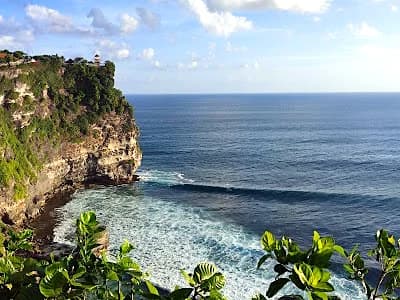
Day one is adjustment: beach, a sunset from somewhere sensible, dinner. Day two earns the early start. Uluwatu Temple sits on a cliff on the island's southern tip — the Kecak fire dance at sunset is the version most visitors know, and it is genuinely worth seeing, though booking in advance is now non-negotiable. Get there early to walk the cliff path before the crowds arrive.
Day three: Tanah Lot, the sea temple on a tidal island to the north-west of Seminyak, is an hour away and best at sunset. This is also a reasonable day to sort any logistics — eSIM if you haven't already, confirm Ubud accommodation, book the Mount Batur sunrise trek if that's on the list.
Note on Kuta: if your flight arrives there and you need one night, fine. Two nights is a plan that most experienced Bali visitors quietly revise after the first one.
Days 4–6: Ubud and the Terraces
The drive from Seminyak to Ubud takes about ninety minutes without traffic, which Bali defines loosely. Leave mid-morning to avoid the worst of it, and stop at Tanah Lot if you skipped it on day three.
Ubud is a compact town that extends its value through day trips. The Tegallalang rice terraces — the terraced steps that appear in approximately seventy percent of Bali travel photos — are fifteen minutes north of Ubud centre. Go early morning, before the tour buses, and you have them largely to yourself. By ten-thirty this is no longer true.
Tirta Empul, the holy spring temple where Balinese Hindus come for ritual purification, is nearby and worth the hour — it is one of those places where the experience of watching something genuinely sacred still happening gives the trip a different texture than beaches and restaurants alone.
The Campuhan Ridge walk starts from the edge of Ubud town, takes about ninety minutes at an easy pace, and costs nothing. It is the low-effort, high-return option on a slower day.
Mount Batur at sunrise requires a 2am departure and a guide, which sounds punishing but rewards with a crater view above the clouds at dawn. (I reckon this is the one thing on the Bali list that actually matches the photographs.)
Day 7: Extension or Return
If you have more than seven days, Nusa Penida makes the most logical extension — a fast boat from Sanur takes forty-five minutes and the island has a coastline that south Bali can't match. One night, two nights maximum — it is a day-trip destination that a lot of visitors over-schedule.
Alternatively, Amed on the east coast is a quieter, diver-focused area — a different version of Bali from either zone above, and worth it if snorkelling on a Liberty shipwreck matters to your trip.
Flight home is from Ngurah Rai, back in south Bali. If you're based in Ubud at the end, leave two hours before you think you need to. The road back to the airport from Ubud is the one variable that Bali guarantees will not cooperate.
The Rule That Fixes Most Bali Itineraries
Consolidate by zone. Every day you cross between Seminyak and Ubud is a day where the traffic takes ninety minutes from your morning. The visitors who get the most out of Bali are the ones who stayed three nights in south, moved to Ubud, stayed three nights, and did day trips outward from each base — not the ones who drove back and forth because they wanted to eat at a restaurant in Canggu on day five while based in Ubud.
The instinct to optimise every single day for the best combination of activities is the one that costs the most time in transit. Pick a base. Exhaust it. Move once.
Rule of thumb for Bali: if you're driving more than ninety minutes in any single day, something in the sequencing is worth reconsidering.
⚠️ The traffic window is real
Bali traffic between Seminyak, Canggu, and Ubud is worst from 8–10am and 5–7pm. Temple visits, sunrise treks, and terrace walks scheduled inside those windows go smoothly. The same trips scheduled to arrive during those hours do not. Build the itinerary around the traffic, not around what time sounds convenient.

What Vani Can Handle Before You Land in Bali
G8Trip's AI assistant, Vani, handles the logistics layer of a Bali trip — the part that involves comparing seventeen slightly different hotel listings and still not being sure which one has the private pool you actually want.
For hotel searches, Vani can filter for specific amenities: beachfront, private pool, spa, free cancellation, villa-style properties. For a Bali trip, this matters more than most destinations — the difference between a guesthouse fifty metres from the beach and one that's technically in Seminyak but a twenty-minute walk from anything is significant, and most hotel aggregators bury this in the small print.
For activities, Vani generates booking links via Klook for Uluwatu Kecak, Mount Batur sunrise treks, Tegallalang entry, cooking classes in Ubud, and water temple visits. For Indian passport holders, Bali is visa on arrival — Vani can confirm current terms and the entry fee.
On itinerary building, Vani can structure the south-to-Ubud sequence with accommodation zones and transit estimates included. What it won't do is warn you that the specific warung you want for dinner in Ubud is closed on Tuesdays. That part still requires a recent TripAdvisor review and a healthy scepticism toward the opening hours listed online.
How many days is a good Bali itinerary?+
What is the best area to stay for a Bali itinerary?+
Is Ubud or south Bali better for a first trip?+
Do I need a visa to visit Bali from India?+
What time of year is best for a Bali trip?+
Bali has been written about so extensively that it is easy to arrive with a fully formed idea of what the trip will look like, then spend the first two days realising the traffic had different plans. Build the sequence, consolidate by zone, and book the Kecak dance before it sells out. The rice terraces can wait until 7am — they will still be there, and you'll have them closer to yourself than you expect.
Ready to plan your trip?
Let Vani, our AI travel assistant, build your perfect itinerary.
Start planning for free →