Bhutan Itinerary: What First-Time Visitors Actually Need
Bhutan is the only destination where the daily cost is fixed before you've decided what to do with the day. The government charges a sustainable development fee per night — for every traveller, whether you hike to Tiger's Nest or spend the afternoon by a river. It's a planning reality. Every day in Bhutan has a floor cost that doesn't change. The only variable is how well you use the days you've already paid for.
Most first-time travellers either pack too much into a bhutan itinerary or underestimate how altitude affects pace. Both mistakes cost you — one in exhaustion, one in missed experience. Here's how to build the trip so neither happens.
ℹ️ TL;DR: Bhutan Itinerary Essentials
Seven to ten days is the practical range for a first visit. Fly into Paro, spend a rest day before hiking anything, move through Thimphu and Punakha, and add Bumthang only if you have eight or more days. All non-Indian visitors need a licensed Bhutanese tour operator — this is a government requirement, not a booking preference.
A Bhutan Itinerary Starts at Paro Airport, Not Thimphu
Paro is Bhutan's only international airport. The approach — through mountain valleys, banking sharply before touchdown — is one of the more unusual arrival experiences in South Asia. After landing, most travellers instinctively want to head straight to Thimphu. This is understandable and usually the wrong call.
Paro sits at around 2,200 metres. Thimphu is slightly higher. If you've flown in from Delhi, Kolkata, or Bangkok, you've arrived at altitude from sea level. The first 24 hours should be treated as an adjustment period rather than a sightseeing sprint. The altitude doesn't affect everyone the same way — but arriving and immediately packing in a full schedule is a reliable way to feel unwell by evening.
Spend the first afternoon walking around Paro town. Not hiking — walking. Get oriented, eat something local, sleep well. The sightseeing begins on Day 2, and it'll be better for it.
Days 1–2: Paro — Rest First, Then Rinpung Dzong and the Town
With acclimatisation covered, Paro has more than enough for a full day. Rinpung Dzong — a fortress-monastery above the river — is an easy half-day visit and a good introduction to Bhutanese architecture. The National Museum of Bhutan is compact but well-curated. The town market is worth an hour.
Save Tiger's Nest for Day 3. The hike takes 4–5 hours return and gains significant elevation — steps that are more demanding than they appear in photographs. Doing it fresh after a proper rest is a meaningfully better experience than doing it on arrival adrenaline.
Day 3: Tiger's Nest — Start Before 8am and Carry Water
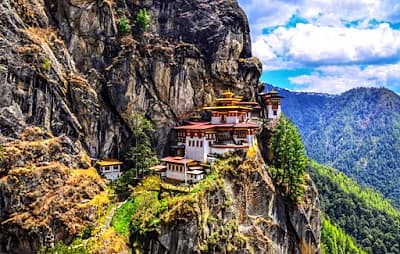
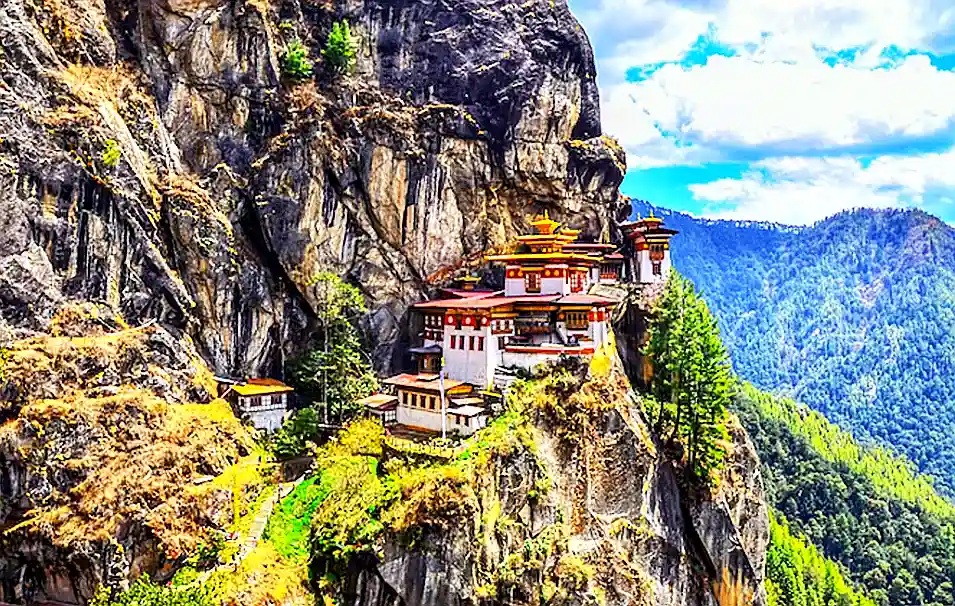
Paro Taktsang is a monastery built into a cliff face at 3,120 metres. It is the image most people carry when they think of Bhutan, and it earns the reputation. Start the hike before 8am if you can manage it. The trail is noticeably busier by mid-morning, and the light before the crowds arrive is considerably better.
There's a cafeteria at the halfway point with a clear view of the monastery from across the valley. Stop here on the way up — it's a natural break and the view from this point is almost as good as the view from the monastery itself (some people find it better, actually). The final section involves steep stone steps and a short metal bridge over a waterfall. Neither is dangerous; both are worth knowing about in advance.
Bring water. Wear layers. The sun on the exposed trail is strong, and the wind at the monastery is cold — both of these things can be true simultaneously and you'll want to be prepared for both.
Thimphu Is Smaller Than You Think — Two Days Is Enough
Thimphu is the capital city and a mountain town with one main commercial street. Most first-time travellers over-schedule it because capitals carry an expectation of scale. Two days is enough, and you won't feel rushed if you use them well.
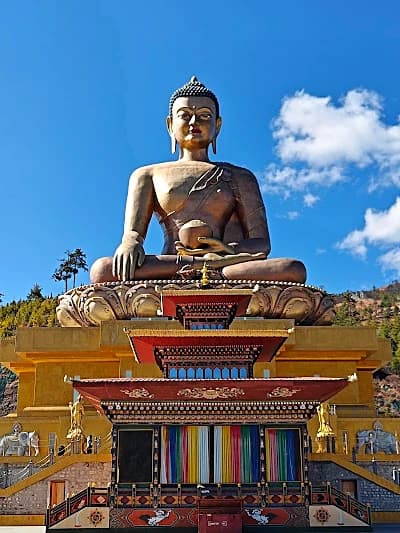
The Buddha Dordenma statue on the hill above Thimphu is the one landmark that actually matches its photographs — it's enormous, the surrounding area is quiet, and the views over the city are genuinely good. Worth a morning visit. The Tashichho Dzong, seat of government, can be visited in the afternoon; interior access has restricted hours so confirm the timing with your guide the evening before.
The National Textile Museum and Folk Heritage Museum are both small and substantive if you're interested in Bhutanese craft or cultural history. Skip both without guilt if you're not. Dzong fatigue sets in faster than most travellers expect, and there are more dzongs ahead.
Punakha Changes the Texture of Every Bhutan Itinerary
The drive from Thimphu to Punakha crosses Dochula Pass at 3,100 metres. On a clear day, you see 108 memorial chortens against Himalayan peaks. On a cloudy day, you see the chortens and then mist. Mountain weather has its own schedule (I've over-optimised for mountain views and still missed them about 40% of the time).
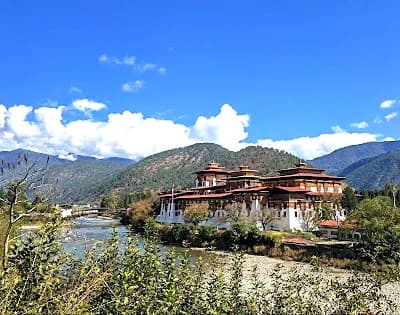
Punakha sits at around 1,200 metres — noticeably warmer than Paro or Thimphu. The Punakha Dzong, at the confluence of two rivers, is the most architecturally significant building in Bhutan. Visit in the morning. The light before noon is worth the early start.
Chimi Lhakhang, the fertility temple, is a 30-minute walk across rice fields from the road — unusual and historically interesting in a way that feels nothing like the tourist circuit. The Punakha Suspension Bridge nearby is a long footbridge worth 15 minutes. Two nights in Punakha is right.
Add Bumthang Only If You Have Eight Days or More
Bumthang is Bhutan's spiritual heartland — four valleys east of Thimphu, home to some of the oldest temples in the country and a pace of life slower than anywhere else on this itinerary. It's a full day's drive from Thimphu or a short domestic flight from Paro.
With fewer than eight days, skip it. The drive time absorbs two days, and one rushed night in Bumthang is a place you passed through, not somewhere you experienced. With eight to ten days, it earns its place. The Jambay Lhakhang and Kurje Lhakhang temples are the centrepieces. The Swiss Farm in Jakar — a dairy and bakery run by Swiss missionaries since the 1960s — is a genuine curiosity. Allow two nights minimum.
The Rule: One Significant Site Per Half-Day, Not Per Day
Rule of thumb for a Bhutan itinerary that doesn't leave you exhausted by Day 5: schedule one significant cultural site — dzong, monastery, museum — per half-day. The other half-day stays slow: a walk, a lunch that runs long, a drive through a valley with no agenda.
Dzong fatigue is real. By the third dzong in three days, most travellers are seeing architecture instead of meaning. The pacing isn't inefficiency — it's how Bhutan works best. The days with the least scheduled are usually the days remembered most clearly. The daily fee creates a psychological pressure to see everything. Resist it. The fee doesn't change either way.
What Vani Can Help With Before You Talk to a Tour Operator
Bhutan requires a licensed tour operator for most international visitors — that sits outside what any AI assistant handles directly. What Vani can do is help you structure the itinerary before you approach an operator, so you arrive with a clear brief rather than a list of questions.
Tell Vani how many days you have, your preferred pace, and what matters most — monastery culture, hiking, photography, or valley drives. She'll build a day-by-day plan covering Paro, Thimphu, Punakha, and optionally Bumthang, and flag where you're over-scheduling. Take that plan to your operator as the starting point.
Vani can also search flights into Paro, help with travel insurance for high-altitude trips, and sort an international eSIM before you land. Bhutan's mobile coverage outside main towns is limited but functional.
💡 Draft First, Then Call the Operator
Build your bhutan itinerary structure in Vani before approaching a licensed tour operator. Coming to that conversation with a day-count, a list of priorities, and a rough route gets you a better-fitted quote than starting with 'I want to see Tiger's Nest and some monasteries.' Operators can refine a plan much faster than they can build one from scratch.
How many days do I need for a Bhutan itinerary?+
Do I need a guided tour to visit Bhutan?+
What is the best time to visit Bhutan?+
Is Tiger's Nest hike difficult?+
What is Bhutan's sustainable development fee?+
Bhutan is the only destination where you've committed to the daily cost before you've decided how to spend the day. That's either a pressure or a permission — permission to stop optimising and just be somewhere properly. The travellers who enjoy it most are usually the ones who treated the daily fee as already spent and focused on the valleys between the dzongs.
The fee doesn't care whether you hiked Tiger's Nest or sat by a river. Your memory of the trip will.
Ready to plan your trip?
Let Vani, our AI travel assistant, build your perfect itinerary.
Start planning for free →