

Hungary Itinerary: Budapest Is Not the Whole Country
A Hungary itinerary usually means four days in Budapest and a vague plan to "maybe see more of the country if there's time." There never is. Budapest earns the attention — it's actually two cities split by a river, with enough sights on each side to fill a week on its own — but treating it as the entirety of Hungary skips thermal towns, a wine region, and a lake the size of a small sea that most Central Europe itineraries never mention. The country rewards a slightly wider frame than the one Instagram gives it, and most of that wider frame is a train ride away, not a flight.
ℹ️ The Short Version
For a first Hungary itinerary, spend 3-4 days in Budapest (Buda and Pest are genuinely different halves), then add 2-3 days split between Lake Balaton and one smaller town like Eger or Szentendre. Six to seven days total covers it without rushing.
How Many Days Does a Hungary Itinerary Actually Need
Budapest alone justifies four days if you treat Buda and Pest as separate assignments rather than one long walk. Buda has the castle district, Fisherman's Bastion, and the hill views; Pest has the Parliament building, the thermal baths, and the ruin bars people actually fly in for. Splitting them across different days beats crossing the river four times in one afternoon chasing a checklist.
Beyond Budapest, the country splits into easy half-day or full-day additions. Szentendre is about 40 minutes by train and covers the artsy-riverside-town box in an afternoon. Eger, further out, is worth a full day and a night if wine and thermal baths both interest you. Lake Balaton is the one most itineraries skip entirely, which is a mistake if you're travelling in summer — it's Central Europe's answer to a beach holiday, minus the sea.
Six to seven days total gets you Budapest properly plus one or two of these additions without turning the trip into a transit exercise.
Eger deserves a specific mention here because it gets left off more itineraries than it should. It sits in the middle of a wine region built around dozens of cellars carved into a single hillside, walkable in an afternoon without needing a car or a tour group. Pair it with the town's own thermal baths and it's a genuinely different two days from anything Budapest offers — not a smaller version of the capital, a different trip entirely.
📌 Eger's Wine Valley
The 'Valley of the Beautiful Women' outside Eger packs dozens of family-run wine cellars into walking distance of each other — no car, no tour bus, just a hillside and an afternoon.
Buda and Pest Are Different Assignments
The river isn't just scenery — it's the reason the two halves of this city feel like different trips. Plan them as such rather than one long walk that happens to cross a bridge.
The Buda Side: Castle Hill and Views
Buda Castle, Fisherman's Bastion, and Matthias Church sit within a fifteen-minute walk of each other on Castle Hill, and the funicular up from the river saves you the climb if you've already done enough stairs this trip. Give this side a full morning — the views over the Danube toward Pest are the reason half the postcards exist, and rushing them to fit in a museum defeats the point. Citadella, higher up on Gellért Hill, is worth the extra half hour if the weather's clear — it's the one viewpoint in the city that gets both riverbanks in a single frame, which is more useful for orientation than it sounds on day one.
The Pest Side: Parliament, Baths, and Ruin Bars
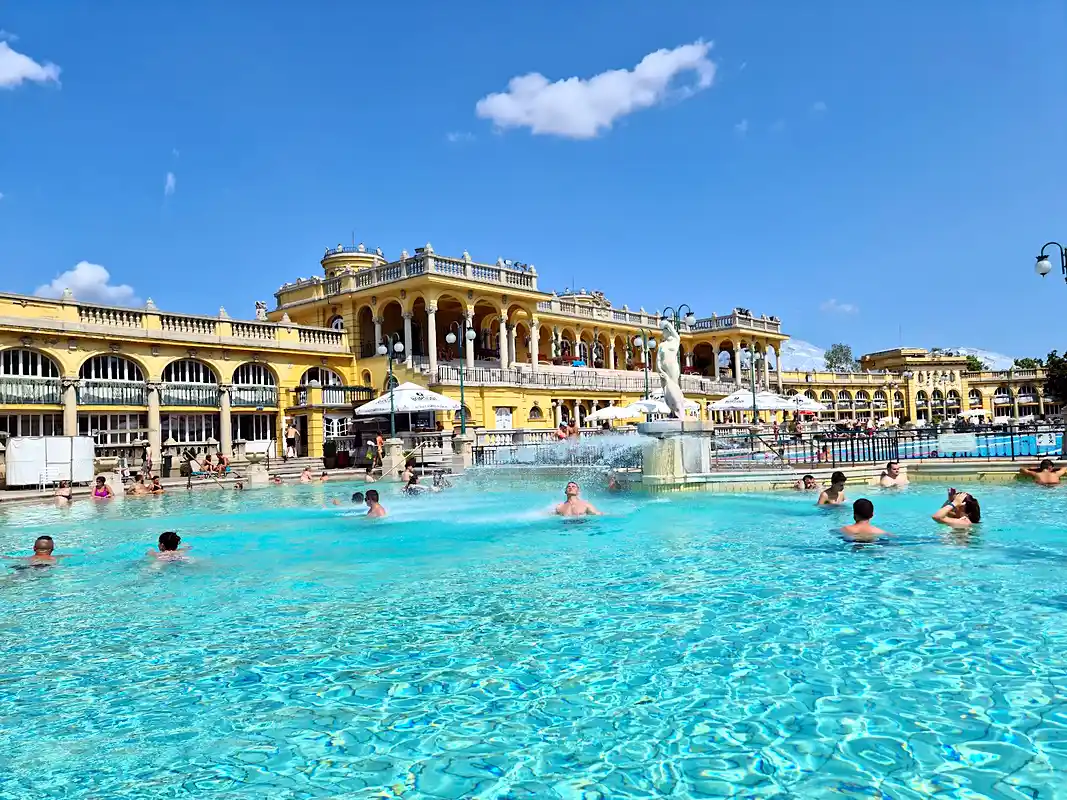
Pest is flatter, bigger, and where you'll spend more actual hours. The Parliament building is best seen from across the river at sunset and, separately, on a guided interior tour if you book ahead — the two experiences aren't substitutes for each other. Széchenyi Thermal Bath deserves half a day, not the rushed hour most itineraries allow; it's a genuine Budapest institution, not a tourist add-on. End an evening in the Jewish Quarter's ruin bars — repurposed courtyards that are more atmosphere than spectacle, which is exactly the point. Szimpla Kert is the one everyone's heard of and the one worth going to anyway; get there before 9pm if you'd rather hear the person next to you than guess.
The Rule of Thumb: Don't Let the River Do Your Planning For You
The Danube splits Budapest visually, but it shouldn't split your itinerary into constant back-and-forth crossings. Group everything on one bank per day — Buda one day, Pest the next — rather than bouncing across a bridge four times because two sights you wanted happened to be close on the map but on opposite sides of the water.
(This sounds obvious written down. It is not obvious at 9am with a paper map and a bridge that looks closer than it is.)
The same logic applies to day trips: pick one direction per day. Szentendre and Eger are both doable, but not on consecutive days if you also want to sleep somewhere other than a train seat.
The same rule holds for Lake Balaton if you're adding it: treat it as its own two-day block with its own base, not a day trip bolted onto the end of the Budapest leg. The lake is large enough that 'seeing Balaton' from a single afternoon means seeing one small stretch of shoreline, not the lake.
What Vani Actually Does for a Hungary Trip
Tell Vani you're doing six days between Budapest and Lake Balaton, and it separates the Buda and Pest sightseeing into different days automatically rather than handing you a flat list sorted by star rating. It searches live flights and hotels through G8Trip's own booking flow — useful for Budapest specifically, where hotel prices swing hard between the touristy Pest side and the quieter, cheaper Buda side. Hungary is Schengen too, so the same visa flow applies: Vani surfaces the requirement for your passport and links to Atlys for the actual application.
What it won't do is guess that you'd rather skip the ruin bars because you mentioned travelling with your parents — it plans from what you tell it, not what it infers about your trip. Say so, and it adjusts. Leave it vague, and you'll get the version built for the median traveller, not your particular one. If your budget's fixed, share the number once you have a full booking list and Vani will flag where Budapest's inflated Pest-side hotel prices are eating more than they should. Start the plan here and correct it as you go.
How many days do I need for a Hungary itinerary?+
Should I stay on the Buda side or the Pest side?+
Do Indian passport holders need a visa for Hungary?+
Is Lake Balaton worth adding to a Budapest trip?+
How do I get around Budapest without renting a car?+
Budapest will hand you a city that looks like one postcard and behaves like two different trips stitched together at a river. Plan for both halves, and Hungary stops being the place people only see through a Vienna layover. Browse more destination guides if you're stacking this onto a longer Central Europe trip.
Ready to plan your trip?
Let Vani, our AI travel assistant, build your perfect itinerary.
Start planning for free →