
Japan's Tourist Tax in 2026 Is No Longer Small Change
Japan spent the last few years being everyone's answer to "where should I go this year." The yen was weak, the flights were full, and Kyoto's back streets got busy enough that residents started complaining about tourists blocking geisha districts on the way to work. Japan tourist tax 2026 is the bill for all of that popularity, and it landed as three separate changes instead of one clean number, which is exactly the kind of detail that gets lost between the headline and the actual credit card statement. None of the three changes is dramatic on its own. Stacked together across a two-week, three-city trip, they're worth thirty seconds of arithmetic before you book anything.
ℹ️ The Short Version
Reports this year say Japan's national departure tax rises from ¥1,000 to ¥3,000 from July 2026, folded automatically into airline tickets. Kyoto introduced a new tiered hotel tax from March 2026, scaling from roughly ¥200 a night at the budget end up to ¥10,000 a night for stays above ¥100,000. Tokyo and Osaka also charge accommodation tax, but at a fraction of Kyoto's new top rate.
Japan Tourist Tax 2026: What Actually Changed
Three separate charges make up what's being called Japan's tourist tax in 2026, and they don't all apply the same way. The national departure tax — sometimes called the sayonara tax — is reportedly tripling from ¥1,000 to ¥3,000 starting July 2026, and it's built into the airline ticket price rather than collected separately, so most travellers won't notice a new line item so much as a slightly higher fare.
Kyoto's change is the sharper one. Reports this year describe a new tiered accommodation tax effective 1 March 2026, replacing the city's older flat-rate system with a scale that runs from around ¥200 a night for budget stays up to ¥10,000 a night for rooms priced above ¥100,000 — a jump some outlets have described as close to a tenfold increase at the top end. Tokyo's accommodation tax stays comparatively modest, reportedly still in the ¥100–200 per person, per night range, and Osaka runs a similar tiered structure to Kyoto's but at lower rates across the board.
None of these are G8Trip-verified figures — they're what's being reported by multiple travel outlets this year, and Japanese municipal tax rates have a track record of being adjusted again once officials see how the first season plays out. Treat the numbers above as a planning range, not a locked quote.
Why Kyoto Is Taking the Biggest Hit
The Overtourism Math Behind the Number
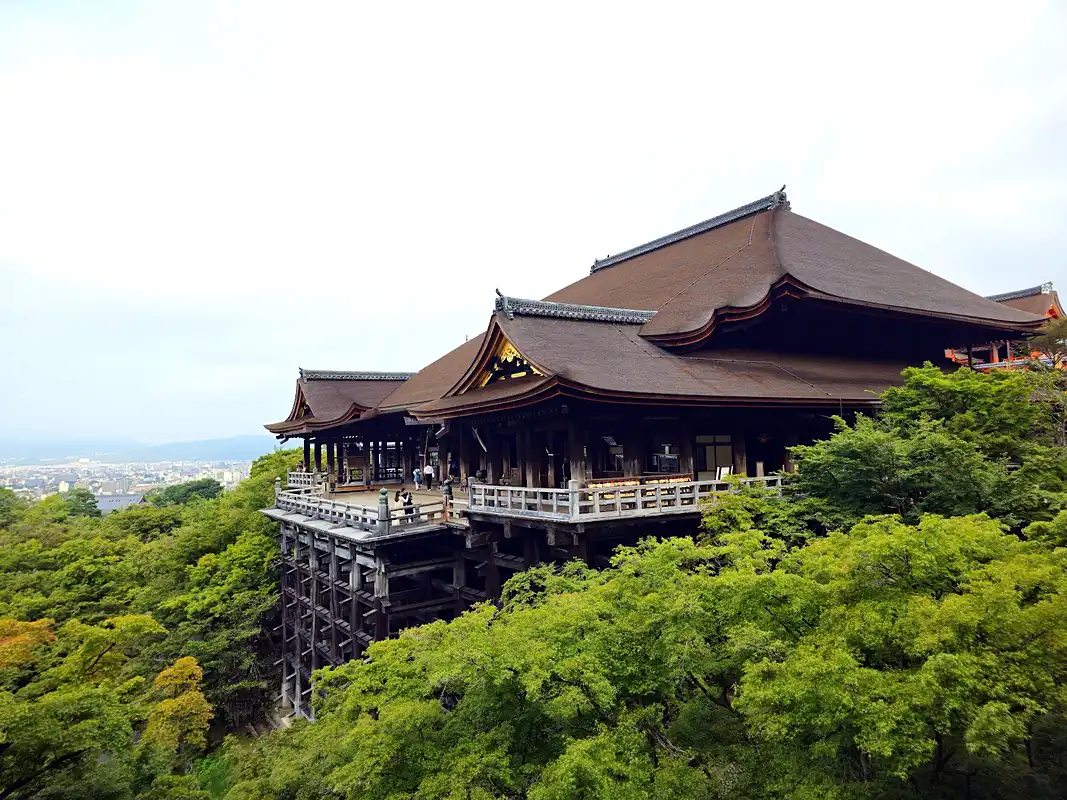
Kyoto's geography makes it a worse fit for mass tourism than Tokyo or Osaka, and that's most of the explanation for why its tax jumped the hardest. The historic districts — Gion, Higashiyama, the bamboo grove in Arashiyama — are narrow streets built for a much smaller population than the one now walking through them daily. Tokyo and Osaka can absorb visitor growth across a sprawling, modern transit network; Kyoto mostly can't, which is why complaints about tourists blocking residential lanes and photographing private geisha houses have been a recurring story out of the city for a few years running.
City officials quoted in coverage of the new tax have framed it plainly: visitors are being asked to help fund the infrastructure and crowd-management costs their numbers create. (Fair enough, from a city council's chair. Less fair enough when you're the one recalculating a Kyoto hotel budget at 11pm because the number in your notes app is from eight months ago.) The tiered structure — cheap for a hostel bed, steep for a five-star suite — is a deliberate choice too, aimed more at the luxury end of the market than at budget travellers who were never the main driver of the crowding complaints in the first place.
What This Actually Costs a Real Trip
For a traveller doing the standard Tokyo-Kyoto-Osaka route, the departure tax adds roughly ¥3,000 total, a small number against any international flight fare. The accommodation tax is where the real range shows up, and it depends entirely on where you sleep and what you pay for it. A traveller splitting ten nights across mid-range hotels in all three cities, with a couple of nights in a higher-end Kyoto property, could plausibly see accommodation tax somewhere in the low thousands of yen total — nowhere close to derailing a budget, but enough to build into the accommodation line rather than discover at checkout.
That range isn't a G8Trip-verified figure either — it's back-of-envelope math using the reported per-night bands above, and Kyoto's top tier only kicks in for rooms most travellers aren't booking anyway. The traveller who should actually run the numbers carefully is the one booking a luxury Kyoto stay, where the jump from the old flat rate to the new ¥10,000-a-night tier is the difference that shows up clearly on a final bill.
Worth separating from all of this: none of it touches visa costs, JR Pass pricing, or the entry fees individual temples and gardens already charged before 2026. The tourist tax conversation this year is specifically about the departure fee and city accommodation levies — everything else in a Japan budget moves on its own schedule, for its own reasons, and shouldn't get folded into the same mental bucket just because both involve a number and the word "Japan."
The Rule of Thumb: Check the Hotel Tax Before the Room Rate, Not After
Nine times out of ten, a booking platform shows the room rate clearly and buries the tax in a line you have to expand or a note you have to scroll past. A workable habit for Japan in 2026: before comparing two hotels on price, check whether either quote already includes accommodation tax. A Kyoto luxury property that looks a little cheaper than a Tokyo equivalent might not be once the new tiered tax is added at checkout — and the two cities' tax structures are different enough now that a direct price comparison without checking is misleading rather than just imprecise.
What Vani Does With This (and What It Doesn't)
Vani will search live flights and hotels for a Japan trip, and it factors your total trip cost — not just the headline room rate — into the comparisons it shows you, which matters more this year than it did before Kyoto's tax overhaul. Tell Vani your budget for the trip and it will flag where the plan is running over against real prices, rather than leaving you to notice at the hotel front desk that a Kyoto stay cost more than the booking screen implied.
What it won't do is track every municipal tax adjustment in Japan in real time and hand you a locked figure six months before you fly. Kyoto's new system is barely a season old as of this writing, and cities in Japan have a habit of fine-tuning a new tax once they see how the first year of bookings actually lands. Confirm the specific city rate close to your travel dates rather than trusting a number from months back, this article included. I've built an AI travel assistant and I still check a city's official visitor tax page the week before I fly there. Make of that what you will.
How much is Japan's tourist tax in 2026?+
Does Tokyo charge a tourist tax like Kyoto does?+
Is the Kyoto hotel tax increase only for luxury hotels?+
When does Japan's new departure tax take effect?+
The departure tax adds less than a decent airport coffee. The Kyoto hotel tax is the one worth a second look — everything else is still just Japan, being exactly as good as it was before anyone started charging for it.
Ready to plan your trip?
Let Vani, our AI travel assistant, build your perfect itinerary.
Start planning for free →