Mexico Itinerary: Start With CDMX, Then the Yucatan
A mexico itinerary drawn up before anyone checks a map usually tries to fit Mexico City, Cancun, Tulum, Oaxaca, San Miguel de Allende, and Cabo into the same ten days. Mexico is roughly three times the size of France, and these places don't share a coastline or a time zone's worth of proximity. Cabo alone sits on the opposite side of the country from the Yucatan. This isn't an itinerary so much as a wish list wearing a schedule, and it usually falls apart the moment someone prices the internal flights.
ℹ️ The Short Version
For a first mexico itinerary, pick two connected regions, not five scattered ones: three to four days in Mexico City with a Teotihuacan day trip, then one short flight to the Yucatan coast for cenotes, Tulum, and Chichen Itza. Nine to eleven days total, one internal flight, no detour to Cabo.
How Many Days Does a Mexico Itinerary Actually Need
Mexico City deserves three to four days on its own, and most of that time has nothing to do with day trips. The Centro Historico, Roma Norte, and Condesa are three different cities wearing one name — colonial plazas, tree-lined avenues with mezcal bars, and a food scene that doesn't need a ranking to justify itself. Add a half-day for Teotihuacan, the pyramid complex an hour outside the city, and Mexico City alone fills four unhurried days without anyone getting on a bus before 7am.
The Yucatan half needs five to six days, based out of either Tulum or Valladolid rather than Cancun. Cancun is the airport you fly into, not where you stay — the hotel zone is built for a different kind of trip than the one built around cenotes and ruins. Tulum gives you beach town energy plus easy access to cenotes and the Tulum ruins themselves. Valladolid, an hour inland, puts you closer to Chichen Itza and a quieter set of cenotes that don't show up on every influencer's feed.
Nine to eleven days covers both halves properly. The domestic flight between Mexico City and Cancun runs about two and a half hours — short enough to treat as a genuine internal leg rather than a second international trip, which is more than you can say for the drive to Cabo.
📌 The Flight That Makes This Work
Mexico City to Cancun is a domestic flight of roughly two and a half hours — one of the few Mexico routes short enough to treat as a same-trip hop rather than a separate journey.
Mexico City Is Not a One-Night Layover Before the Beach
Most itineraries give Mexico City a single night before flying onward to the coast, treating it as a stopover with a tequila shot attached. That undersells a city with more museums than most countries, a historic centre built on the ruins of Tenochtitlan, and neighbourhoods that reward slow mornings more than checklist sightseeing.
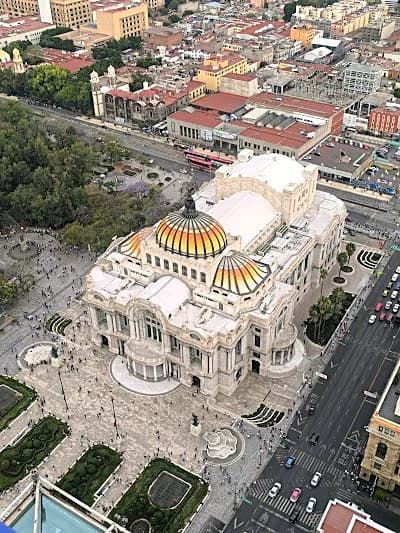
Roma Norte and Condesa are where you'd actually want to eat and walk — Art Deco buildings, small plazas, and a café density that makes it hard to plan more than two stops before lunch happens by accident. The Centro Historico carries the weight of the city's history: the Zocalo, the Metropolitan Cathedral, and the Palacio de Bellas Artes, whose Art Nouveau exterior and Art Deco interior somehow both work.
(Yes, Mexico City sits at about 2,240 metres of elevation. No, nobody warns you about the first-day headache until you're already looking for painkillers in a pharmacy where you don't speak enough Spanish to explain the symptom.)
Teotihuacan Is a Half-Day, Not a Full One
Teotihuacan gets treated like an all-day pilgrimage, and it doesn't need to be. The Pyramid of the Sun and the Pyramid of the Moon can be climbed and photographed within three to four hours, including the walk down the Avenue of the Dead between them. Go early — the site opens before most Mexico City breakfast places do — and you'll beat both the heat and the tour buses that arrive by mid-morning.
Most day-tour packages bundle Teotihuacan with a stop at a tequila or obsidian workshop that exists purely to extend the tour and sell you something on the way back. Skip the bundle, hire a driver or take the bus from Terminal Norte directly, and you'll be back in Roma Norte in time for a late lunch instead of losing the whole day to a gift shop detour.
The Yucatan Half Is Where the Trip Actually Slows Down
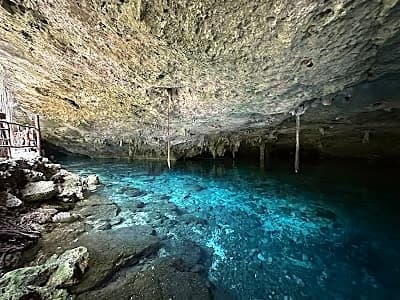
The Yucatan side of a mexico itinerary works because it removes the need to be anywhere at a specific hour. Cenotes — the limestone sinkholes filled with startlingly clear freshwater — are scattered across the peninsula, and most towns have at least two within a short drive. Swim in the morning before the tour groups arrive, and a cenote that photographs like a private lagoon still feels like one.
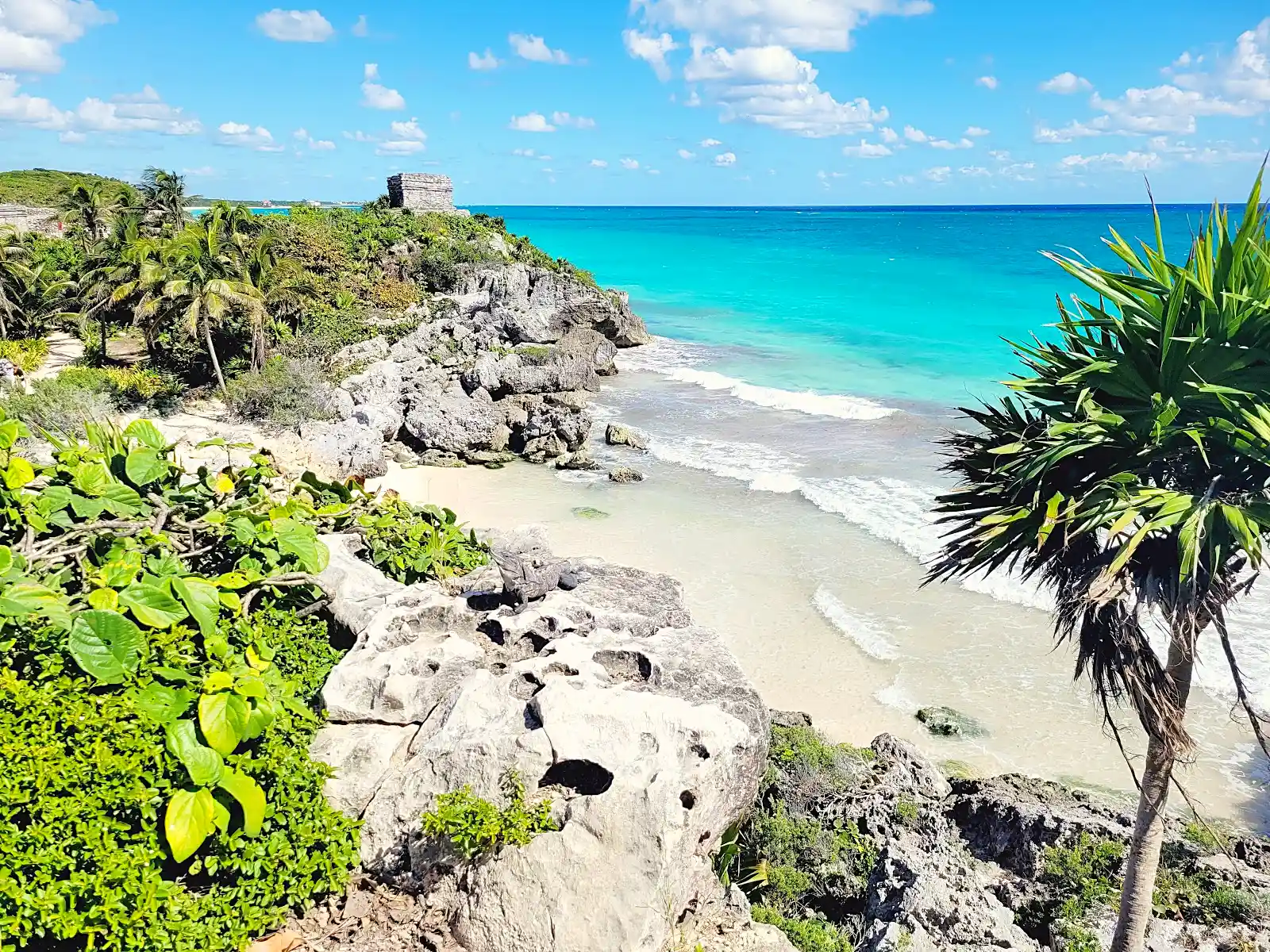
Tulum itself splits into two zones worth treating separately: the archaeological site, a compact set of Maya ruins on a clifftop above the Caribbean, and the beach road, lined with beach clubs that charge for a lounger and call it a day pass. The ruins take ninety minutes including photos. The beach road takes as long as your budget holds out.
Valladolid, the quieter colonial town an hour inland, is worth a night on its own rather than a pass-through — pastel buildings, a cenote inside a cave you can walk down into, and none of the beach-town markup on food.
Chichen Itza Is a Day Trip From Valladolid, Not Cancun
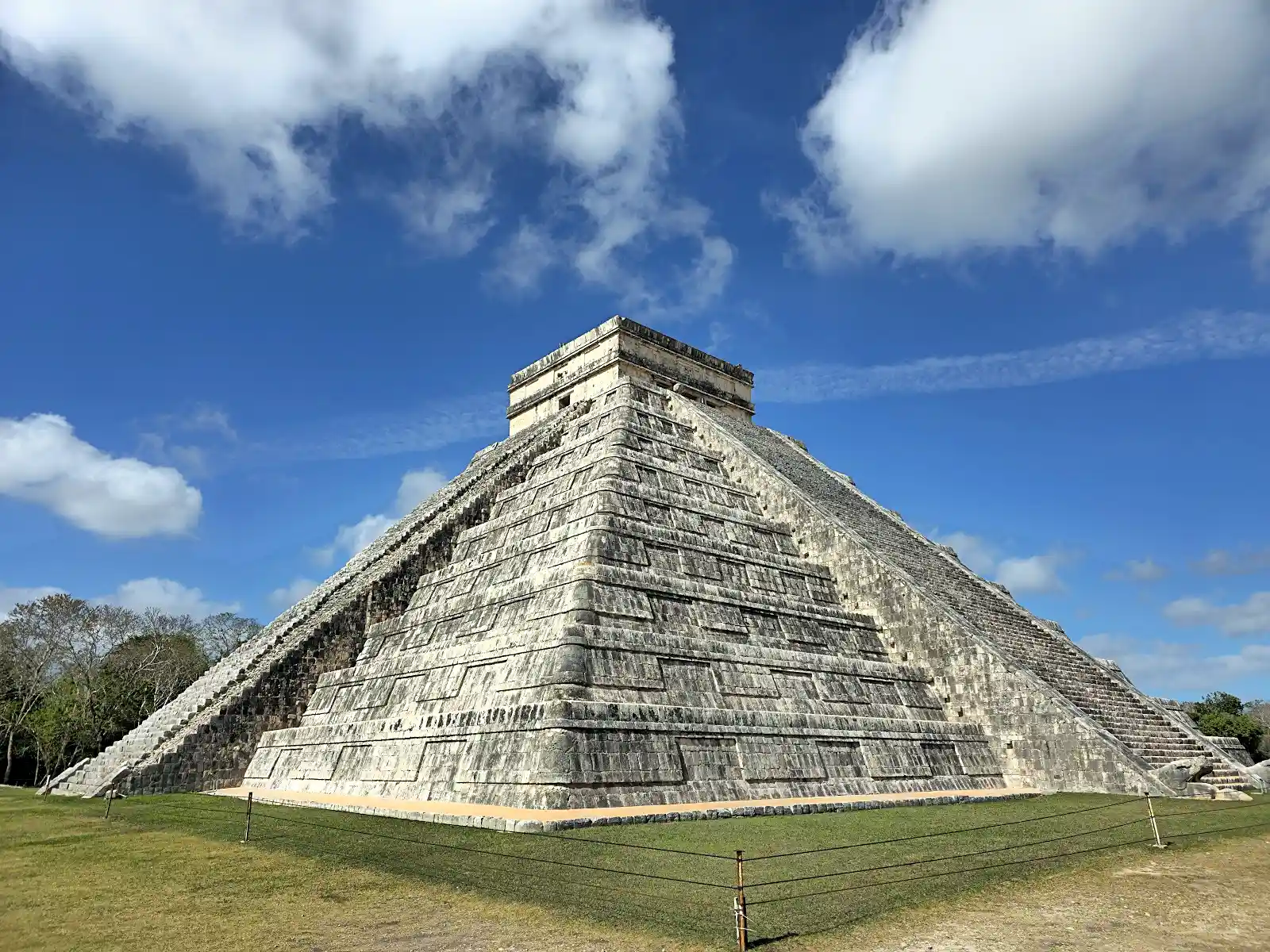
Chichen Itza gets sold to Cancun-based travellers as a day trip, and technically it is — if you're willing to spend five hours of a nine-hour day on a bus. From Valladolid, it's forty-five minutes each way, which turns the same site into an actual morning rather than an endurance test.
Arrive at opening, 8am, and El Castillo — the main pyramid — is still photographable without forty tour groups in the frame. By 11am, the buses from Cancun start arriving in waves, and the site's energy shifts from ancient Maya capital to a departure hall with better architecture.
Chichen Itza is a UNESCO World Heritage Site and one of the New7Wonders of the World, which is also why it's the single most crowded ruin in the Yucatan. Basing from Valladolid instead of Cancun is the one decision in this entire itinerary that actually changes the experience, not just the logistics.
The Rule of Thumb: One Flight, Two Regions, Not Five
Every additional region added to a first Mexico trip subtracts a day from the two that actually justify the flight. Oaxaca's food scene, San Miguel de Allende's colonial streets, and Cabo's beaches are all genuinely worth visiting — just not on the same itinerary as Mexico City and the Yucatan, because none of them sit on the way to anything else.
If Mexico City to Yucatan is one flight in a sensible direction, Oaxaca is a detour south, San Miguel is a bus ride from Mexico City in the opposite direction from the airport, and Cabo is on a different peninsula entirely, closer to San Diego than to Cancun. Treat them as separate trips, not missed opportunities on this one. A country the size of Mexico rewards patience more than ambition.
What Vani Actually Does for a Mexico Trip
Tell Vani you're doing four days in Mexico City and six on the Yucatan coast, and it builds the plan around the actual CDMX–Cancun flight rather than assuming the two halves are a short drive apart. It searches real-time flights and hotels through G8Trip's own booking flow, which matters here specifically — Yucatan hotel pricing swings hard between Cancun's hotel zone, Tulum's beach road, and inland Valladolid, and seeing all three side by side is more useful than three separate browser tabs.
Indian passport holders should check Mexico's current visa rules before booking — Vani checks the requirement against your travel dates and links through to Atlys for the application. It'll also pull eSIM options through Saily for the trip, since the peninsula has patchier signal than the CDMX end.
What it won't do is know you'd rather skip Tulum's beach clubs because you've already done Bali's version of the same thing — it plans from what you tell it, not what it assumes. Start the plan here and adjust the split as the trip takes shape.
How many days do I need for a mexico itinerary?+
Should I base in Cancun or Tulum for the Yucatan half?+
Do Indian passport holders need a visa for Mexico?+
Is it worth adding Oaxaca or Cabo to a first Mexico trip?+
What's the best time of year for a Mexico itinerary?+
Mexico will always look like one country on a flight search page and feel like three once you're standing in Mexico City trying to figure out how anyone fits in Cabo. Pick the two regions that actually connect, do them properly, and let Oaxaca be the trip you're already looking forward to planning next year. Browse more destination guides before you build the flights around a route that doesn't actually connect.
Ready to plan your trip?
Let Vani, our AI travel assistant, build your perfect itinerary.
Start planning for free →