
A Morocco Itinerary That Doesn't Fall Apart by Day Three
Morocco is the destination where every planning instinct you have will be tested, usually by the map. The medinas look walkable — until you're inside them. The Sahara sounds like a side trip — until you realise it's an 8–9 hour drive from Marrakech through the Atlas Mountains. Fes and Chefchaouen are both on every 'must see' list — until you check their positions relative to each other and realise they're not on the same route.
Most morocco itinerary plans fail for the same reason: they treat Morocco like a city-hopping trip in Europe, where trains run on the hour and distances are forgiving. Morocco works on different logic. The distances are real. The mountain roads are slow. The medinas will absorb a full day without asking permission. Build the itinerary around geography first, then enthusiasm.
💡 The Route That Works
Marrakech first (3 nights), then east to the Sahara at Merzouga (2 nights), then north through Fes (2 nights), and optionally Chefchaouen (2 nights) before flying out. This clockwise southern loop is 10–12 days and avoids doubling back. If you have fewer than 8 days, pick either the Sahara or the north — not both.
The Morocco Itinerary That Makes Geographic Sense
Morocco has five genuinely distinct experiences worth building a trip around: the medieval medinas of Marrakech and Fes, the blue-painted streets of Chefchaouen in the Rif Mountains, the Sahara desert camps at Merzouga's Erg Chebbi dunes, and the Atlantic coast from Essaouira to Agadir. Each one deserves time. The problem is they aren't clustered.
The route that makes sense for most first-timers: fly into Marrakech, spend three days in the city, drive south through Ouarzazate and the Draa Valley to reach Merzouga for the Sahara, then drive north through Midelt to Fes. From Fes, Chefchaouen is about three hours west. Then a flight or train back to Marrakech or Casablanca.
This is the clockwise southern loop. It works because it avoids retracing your steps and ensures you see both the imperial cities and the desert in a single circuit. Almost every other routing involves driving the same mountain pass twice, which on a 10-day trip is a meaningful cost in time that most itinerary guides forget to mention.
Marrakech Takes Longer Than the Instagram Suggests
Why Two Nights Is Not Enough
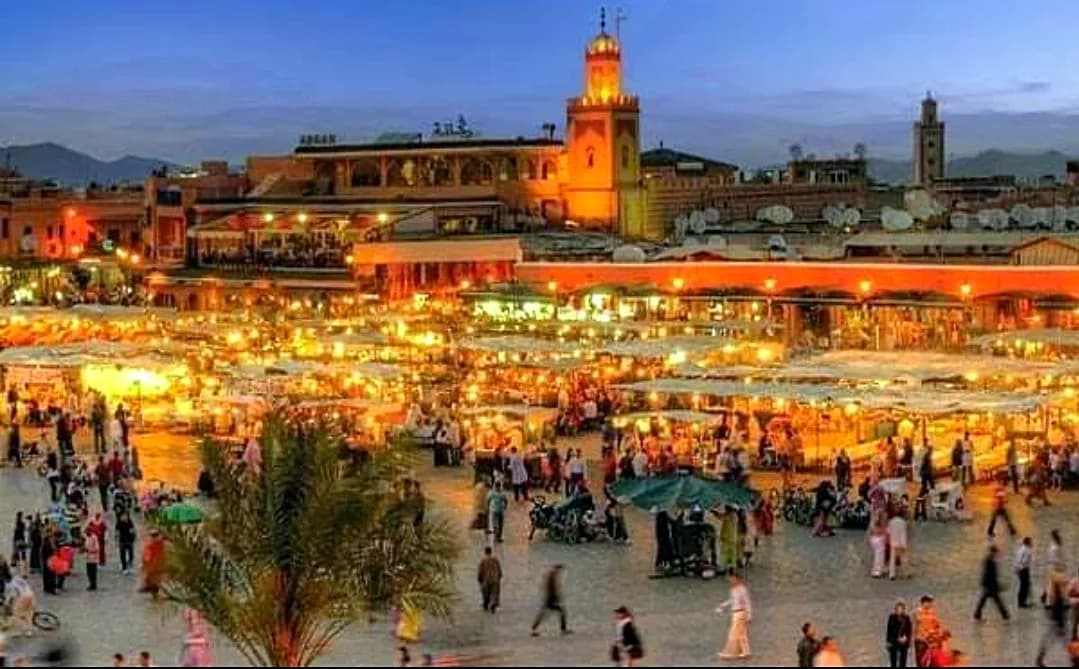
The first half day in Marrakech will be spent getting lost. That's not a failure of navigation — it's the architecture. The medina was designed to disorient outsiders, and it does this reliably across centuries. Budget a morning just for souk orientation: the spice market, the leather goods area, the section that sells nothing but lanterns. By the second day, you'll have a rough mental map. That's when the real exploration can begin.
Two nights gets you Jemaa el-Fna by day and night. Three nights gets you the day trips — Ouzoud waterfalls, the Ourika Valley, or the Agafay desert on the city's edge. If you're planning to do any of these, book them in advance. The popular drivers and guides fill up, particularly in spring and autumn.
What Actually Eats Your Time in Marrakech
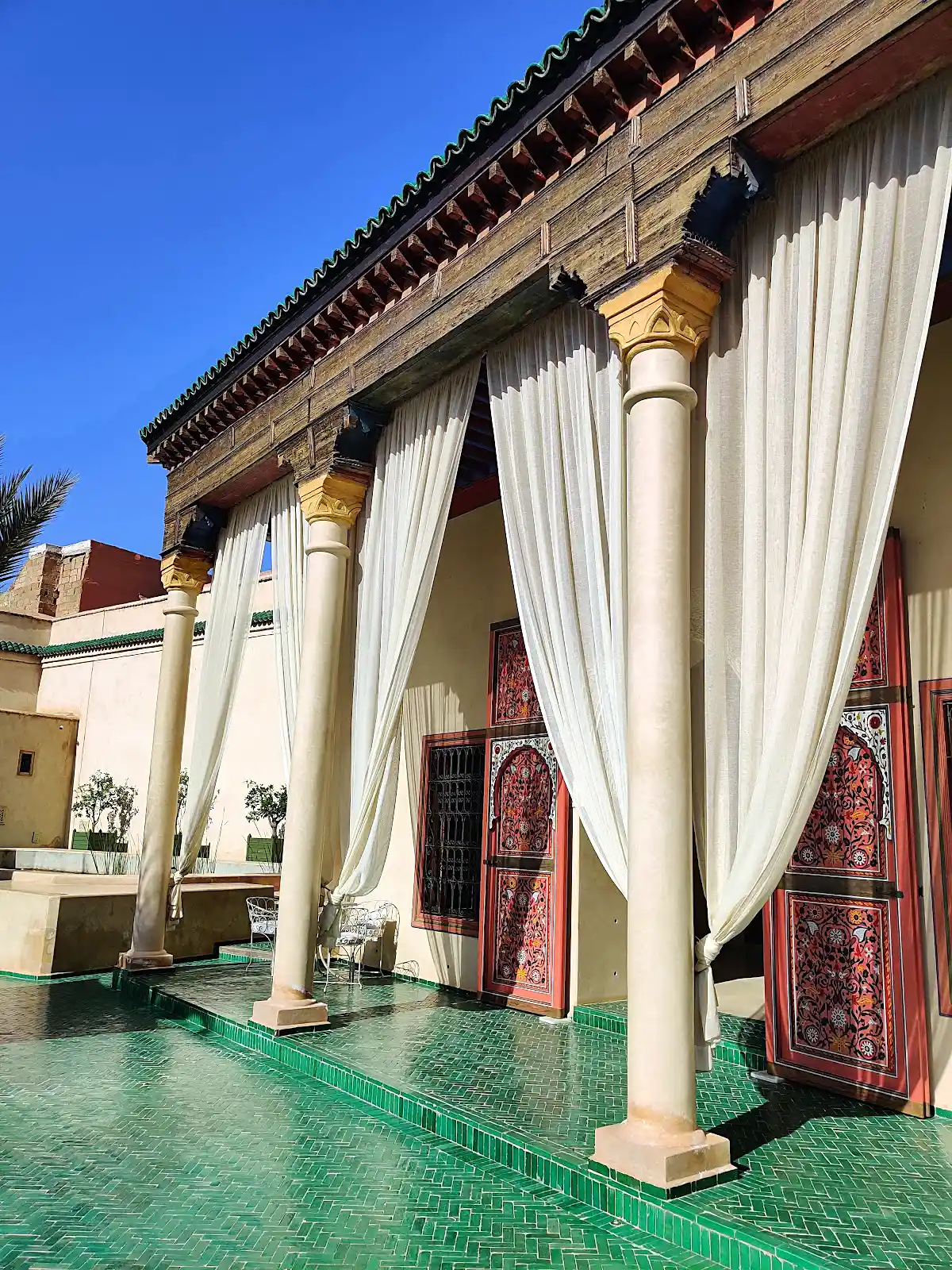
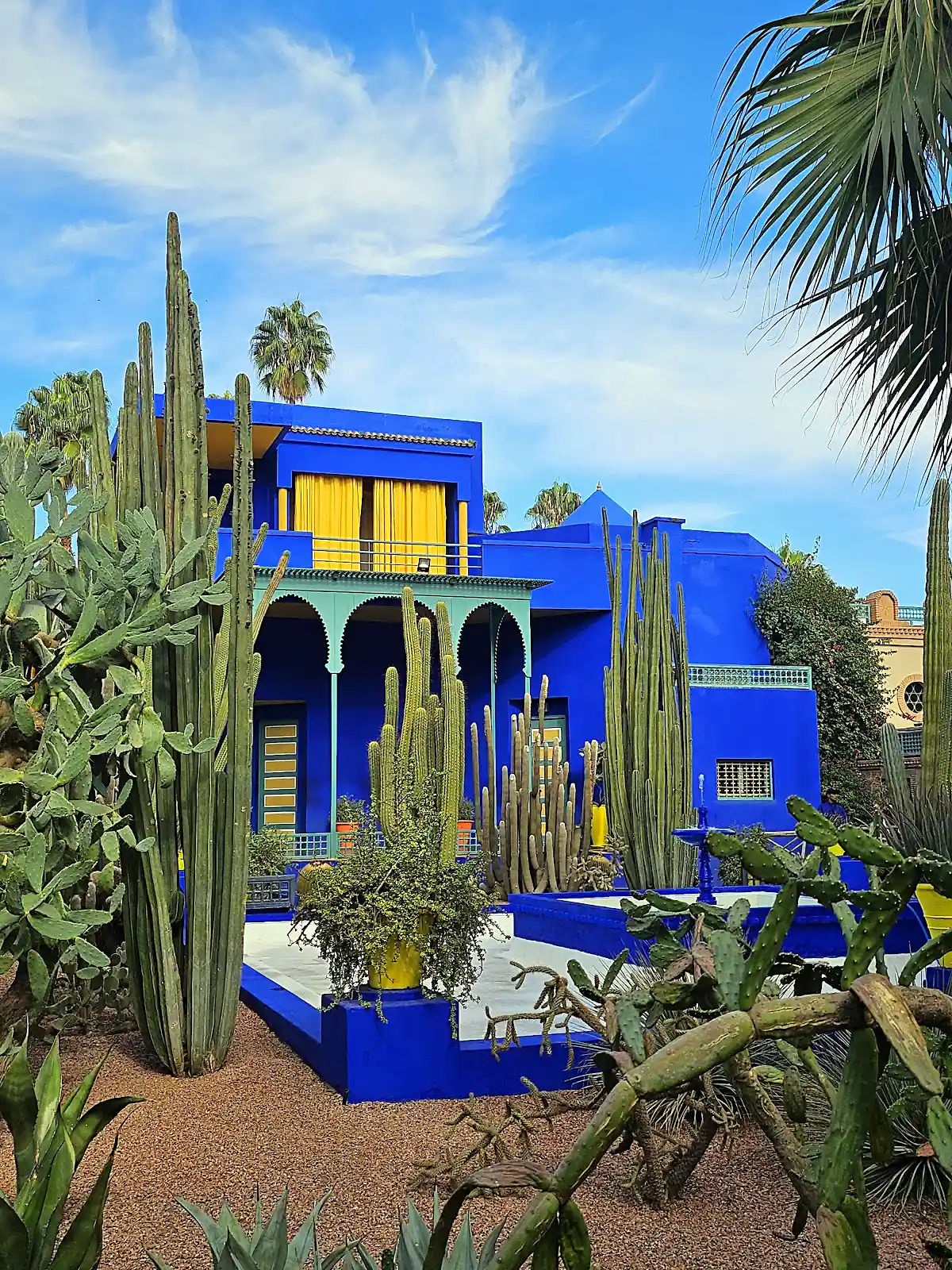
The Koutoubia Mosque is the city's landmark — visible from most of the medina, not accessible to non-Muslims, but worth understanding as your orienting reference point. Jemaa el-Fna, Bahia Palace, the Majorelle Garden, and the Saadian Tombs (16th century, about an hour including the queue) are the non-negotiable sites. Add a hammam — traditional bathhouse — to the list if you're staying three nights. Every guidebook mentions hammams. Most tourists skip them because the booking process seems unclear. It isn't: any riad can recommend one within walking distance and tell you what to bring.
If you're doing all of this without being rushed between a food tour and a cooking class the internet has convinced you is mandatory, you need three full days in Marrakech. Not two.
Fes or Chefchaouen — Most Itineraries Try to Do Both
Fes el-Bali, the old medina of Fes, is one of the largest car-free urban areas in the world. It's also the most disorienting. Unlike Marrakech's medina, which has been partially modernised and gently signposted for visitors, Fes offers no such concessions. Hire a local guide for your first half day — this is not optional advice, it's logistics. The tanneries, where leather has been processed using the same methods since the 11th century, are the headline attraction. You view them from rooftops above leather goods shops, which is a slightly uncomfortable arrangement that everyone accepts anyway because the sight is worth it.
Chefchaouen, the blue city in the Rif Mountains, is about three hours from Fes. It photographs beautifully. It also has approximately one day's worth of things to do before you've seen most of it. The rule of thumb: if your morocco itinerary is 10 days or more, include Chefchaouen. If it's 8 days, Fes is the better use of two days. If it's 7 days or fewer, the Sahara is more worth the time than either city comparison.
The Sahara Detour Takes More Time Than It Looks Like on the Map
Merzouga is the standard access point for the Sahara's Erg Chebbi dunes. The drive from Marrakech via Ouarzazate takes roughly 8–9 hours on the main national road — longer if the Tizi n'Tichka mountain pass has any weather issues or heavy traffic. This is not a day trip.
The sensible plan: drive to Merzouga, arrive late afternoon, ride a camel to a desert camp at sunset (or take a 4WD if camels aren't relevant to your holiday), sleep at the camp, watch the sunrise over the dunes the next morning, return to the hotel in Merzouga, and begin the drive north toward Fes the following day. Two nights at Merzouga — one at the town hotel to recover from the drive, one at the desert camp — works far better than the one-night version many tour operators sell.
(There are domestic flights from Marrakech to Errachidia, near Merzouga, that cut the drive time. They exist. The road journey through the Atlas Mountains and the Draa Valley is itself a large part of what makes the Sahara trip worth doing. I'd take the road.)
⚠️ The Atlas Mountain Pass in Winter
The Tizi n'Tichka pass connecting Marrakech to Ouarzazate can be closed by snow from December to February. If your Sahara trip falls in these months, verify the pass status before confirming the route. There's an alternative via Agadir and Zagora, but it adds time and changes the geometry of the loop.
Rule of Thumb: Never Plan a Highlight on the Day You Arrive
This applies everywhere, but it matters more in Morocco than most places. Marrakech's Jemaa el-Fna is overwhelming when you're carrying luggage and haven't found your riad yet. The Fes medina makes no spatial sense on an empty stomach and a five-hour drive behind you. The desert camp at Merzouga has limited options for rerouting once you're there.
The rule is practical: the day you arrive anywhere new in Morocco, do nothing that requires orientation or energy. Find the riad. Find food near the riad. Walk fifteen minutes in one direction to understand the neighbourhood. Sleep.
Every additional day you give a Moroccan city pays compound returns. The first day you're lost and overwhelmed. The second day you have a rough mental map. The third day you have favourite corners, a coffee spot, and a sense of how the place actually works. Most first-time Morocco trips give two days to Marrakech and then wonder why they felt like they didn't really see it. They didn't. Not quite.
Where Vani Helps With a Morocco Itinerary — and One Thing It Can't Do
Vani, G8Trip's AI travel assistant, handles most of the planning scaffolding for a Morocco trip: building the day-by-day itinerary for your specific duration, searching real-time flights into Marrakech or Casablanca, finding riads and hotels with live pricing, and surfacing visa requirements for Indian passport holders. (Indian passports currently allow visa-free entry to Morocco for up to 90 days — Vani can confirm current requirements before you book, since these can change.)
For activities — desert camp bookings, hammam reservations, tannery tours, day trips from Marrakech — Vani generates booking links via Klook and GetYourGuide partner integrations.
What Vani can't do is navigate the Fes medina on your behalf. It can tell you roughly how long the tannery visit takes and suggest where to stand for the best view. The actual navigation, the wrong turns, the vendor who redirects you through his carpet shop — that part remains yours.
Start your Morocco trip plan with Vani and get the routing sorted before you land.
How many days do I need for a Morocco itinerary?+
Do I need a visa for Morocco as an Indian passport holder?+
Is a guided tour better than planning Morocco independently?+
What's the best time of year to visit Morocco?+
Is it safe to drive in Morocco independently?+
Morocco will eat more time than your itinerary allows. This is not a complaint — it's a feature. Build in one extra buffer day somewhere in the middle of the trip. You'll either use it for the thing you didn't know you wanted to do, or spend it smugly at the riad, which is also a valid outcome.
Ready to plan your trip?
Let Vani, our AI travel assistant, build your perfect itinerary.
Start planning for free →