
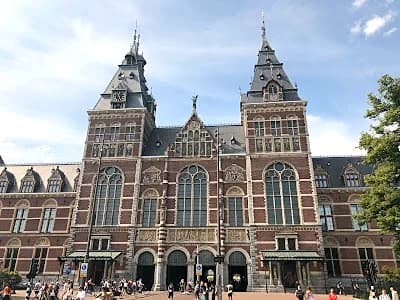

Netherlands Train Strike 2026: What It Actually Breaks
Europe's rail network markets itself as the calm alternative to flying — book a ticket, skip security, watch the countryside go by. Then one country's transport union calls a 24-hour strike, and five other countries' timetables fall apart with it. That's the short version of the Netherlands train strike 2026: on 9 September, Dutch transport workers walked out nationwide over proposed cuts to unemployment support and disability assistance. Within hours, Eurostar was cancelling and retiming services to Brussels, Paris and London. Deutsche Bahn's ICE trains to Cologne and Frankfurt stopped running. ÖBB's Nightjet sleepers to Vienna and Zurich didn't leave the platform. None of this was really about trains. It rarely is.
ℹ️ What Actually Happened
A 24-hour Dutch nationwide strike on 9 September 2026 halted most domestic Netherlands Railways (NS) services and forced Eurostar, Deutsche Bahn and ÖBB Nightjet to cancel or reroute international connections through the Netherlands from 8–10 September. A skeleton AirportSprinter service kept Amsterdam Centraal and Schiphol linked throughout. If your trip touches this window, check your specific operator's app before assuming the whole network is down.
What the Netherlands Train Strike 2026 Actually Shut Down
Most domestic NS services stopped for the full 24 hours. That part was expected — it's a national strike, domestic trains are the most direct target. What surprised travellers who weren't even going to the Netherlands was the international knock-on: Eurostar suspended and retimed services to Brussels, Paris and London between 8 and 10 September; Deutsche Bahn's ICE trains toward Cologne and Frankfurt didn't run; ÖBB's Nightjet sleepers to Vienna and Zurich were cancelled outright; and regional cross-border links into Belgium and Germany were disrupted alongside them.
The strike itself wasn't a rail-specific pay dispute — it was a broader public-sector walkout over the Dutch government's proposed reductions to unemployment support and financial assistance for people unable to work due to chronic health limitations. Rail workers joined because they're public-sector employees too, not because Dutch Railways and its unions were negotiating train-specific terms. That distinction matters for how the story gets reported: a headline reading "Netherlands train strike 2026" makes it sound like a rail dispute, when the actual cause sits one level up, in a budget negotiation most train passengers never hear about.
Why One Country's Labour Dispute Breaks Everyone Else's Trains
International trains aren't really international. They're domestic trains that happen to cross a border. A Eurostar service running Amsterdam to London still needs Dutch track, Dutch signalling, and in many cases Dutch crew for the leg inside the Netherlands. When that layer of the system stops, it doesn't matter that the train is technically operated by Eurostar or Deutsche Bahn — the segment running through Dutch territory can't move, and the schedule for the whole route collapses with it.
This is the same mechanism behind most cross-border transport disruptions: the strike, weather event, or staffing shortage rarely stays inside the country where it started. It travels along whatever infrastructure is shared, which is why a Delhi traveller with a Paris-Amsterdam-Berlin leg on their euro trip can get caught by a dispute that has nothing to do with France or Germany at all. (This is also why a euro trip itinerary built with country-by-country buffers tends to survive these weeks better than one built assuming every border is invisible.)
The Skeleton Service That Kept Schiphol Reachable
Through an emergency operational agreement, NS ran a minimal AirportSprinter service — roughly four trains an hour in each direction — connecting Amsterdam Centraal, Amsterdam South, Schiphol Airport and Hoofddorp throughout the strike. If you had a flight to catch, this was almost certainly how you got there. Full service resumption was planned from 10 September, but recovery from any 24-hour national strike is rarely instant: rolling stock and crews end up out of position, and the ripple typically runs a few hours to a full day past the strike's official end.
If your itinerary had a same-day connection landing right on the recovery window — say, a Nightjet from Amsterdam the evening of the 10th — that was the riskier leg, not the strike day itself. Recovery windows are where most of the actual missed connections happen, precisely because travellers relax the moment the strike is technically over.
The Rule of Thumb for Any European Rail Strike
Check the specific operator, not the country. "Netherlands train strike" as a headline tells you something happened; it doesn't tell you whether your Thalys, ICE or regional connection was actually affected, because skeleton services and international exemptions vary by operator and route. I reckon nine times out of ten, the traveller who panics and rebooks everything loses more time than the one who opens NS, Eurostar or Deutsche Bahn's own status page and checks the actual train number.
I'll admit I'm not above making the opposite mistake. I have a B.Tech from IIT Kanpur and have spent eighteen years in product roles solving exactly this kind of scheduling problem professionally — and I've still missed a connection because I over-optimised a transit route down to a fifteen-minute buffer and called it efficient. It wasn't. It was fragile. The rule of thumb that actually works: if your trip crosses a known strike window, build one buffer day around it, not fifteen extra minutes you're proud of. A buffer day costs you a hotel night. A missed Nightjet costs you the hotel night anyway, plus a rebooking fee, plus the argument with whoever you're travelling with about whose idea the fifteen minutes was.
What Vani Actually Does Here (and What It Doesn't)
If a strike forces you to swap a train leg for a flight, Vani can search live flights and hotels with real pricing inside G8Trip's own booking flow, and she'll surface visa or insurance information if your rerouted itinerary suddenly touches a different country than planned. What she won't do is monitor live European rail strike status for you — that's not a capability in her toolkit today, and I'd rather say that plainly than let you find out mid-trip. For the actual disruption status, the operator's own page is still the fastest source.
For rebuilding the rest of the trip around it, start a new plan with Vani rather than trying to patch three train websites and a flight comparison tab together at 11pm. And if the Netherlands leg was meant to be a highlight rather than a connection, our Netherlands itinerary guide covers the day trips worth keeping even if your travel dates shift by a day or two.
Will my Eurostar ticket be refunded if my train was cancelled during the Netherlands train strike 2026?+
Is it safe to travel through the Netherlands right now?+
Should I switch to flying instead of taking the train through the Netherlands?+
How do I check if my specific train is affected by a strike like this?+
The strike lasted 24 hours. The recovery took a bit longer, because rolling stock doesn't teleport back into position just because the union and the government shook hands. Build the buffer day. Your connection won't thank you — connections can't do that — but you'll stop needing to thank anyone for saving it.
Ready to plan your trip?
Let Vani, our AI travel assistant, build your perfect itinerary.
Start planning for free →