Singapore Trip Plan: How Four Days Actually Works Out
Singapore is one of the most consistently over-planned destinations in Asia. Every first-time visitor builds a singapore trip plan with more items on it than four days can cover — Marina Bay Sands, Gardens by the Bay, Universal Studios, Sentosa, the Night Safari, the Zoo, Chinatown, Little India, Clarke Quay, two hawker centres, a rooftop bar, and a museum. Most Singapore visits are four or five days. This mismatch produces a trip where you spend more time in taxis between attractions than at any individual place. The fix is not a better itinerary. It's a shorter list.
ℹ️ The Four-Day Framework
Marina Bay and the city centre on arrival. Chinatown and Little India the following day. A half-day on Sentosa, a half-day at the Botanic Gardens or Gardens by the Bay. One day at the end for the things that didn't fit. One EZ-Link card handles the MRT for all of it. That's a Singapore trip plan that leaves you feeling like you were in a city, not an itinerary.
Why Your Singapore Trip Plan Has Too Many Things in It
Singapore is physically small — roughly 50 kilometres across at its widest — and the MRT connects most major areas with notable efficiency. The practical implication is that any individual attraction is reachable from any other in under 40 minutes. This is a logistical advantage that most travellers misuse: they treat the good public transport as a reason to visit more places in a day rather than spending meaningful time in fewer.
A half-day in Chinatown — walking the streets, stopping at a hawker centre for lunch, looking into a temple, sitting in a coffee shop without a plan — is a morning well spent. The same half-day divided between four attractions produces four photographs and no particular sense of having been anywhere. Singapore is compact enough to walk slowly. The version of the trip built around that fact is better than the version built around the list.
How to Sequence Four Days in Singapore
Day 1: Marina Bay and the City Centre
Most flights from India to Singapore arrive in the morning, which gives you a useful first half-day. The MRT runs from Changi Airport to the city in roughly 35 to 45 minutes on the East West Line, depending on your hotel location. The airport itself is worth more time than you'll give it — Jewel Changi's indoor waterfall and retail circuit will absorb 45 minutes before you notice. Budget for it rather than fighting it.
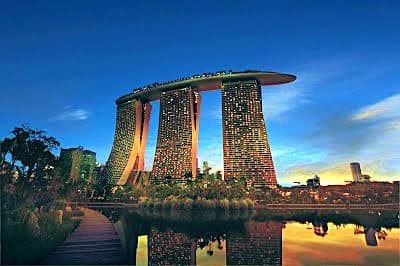
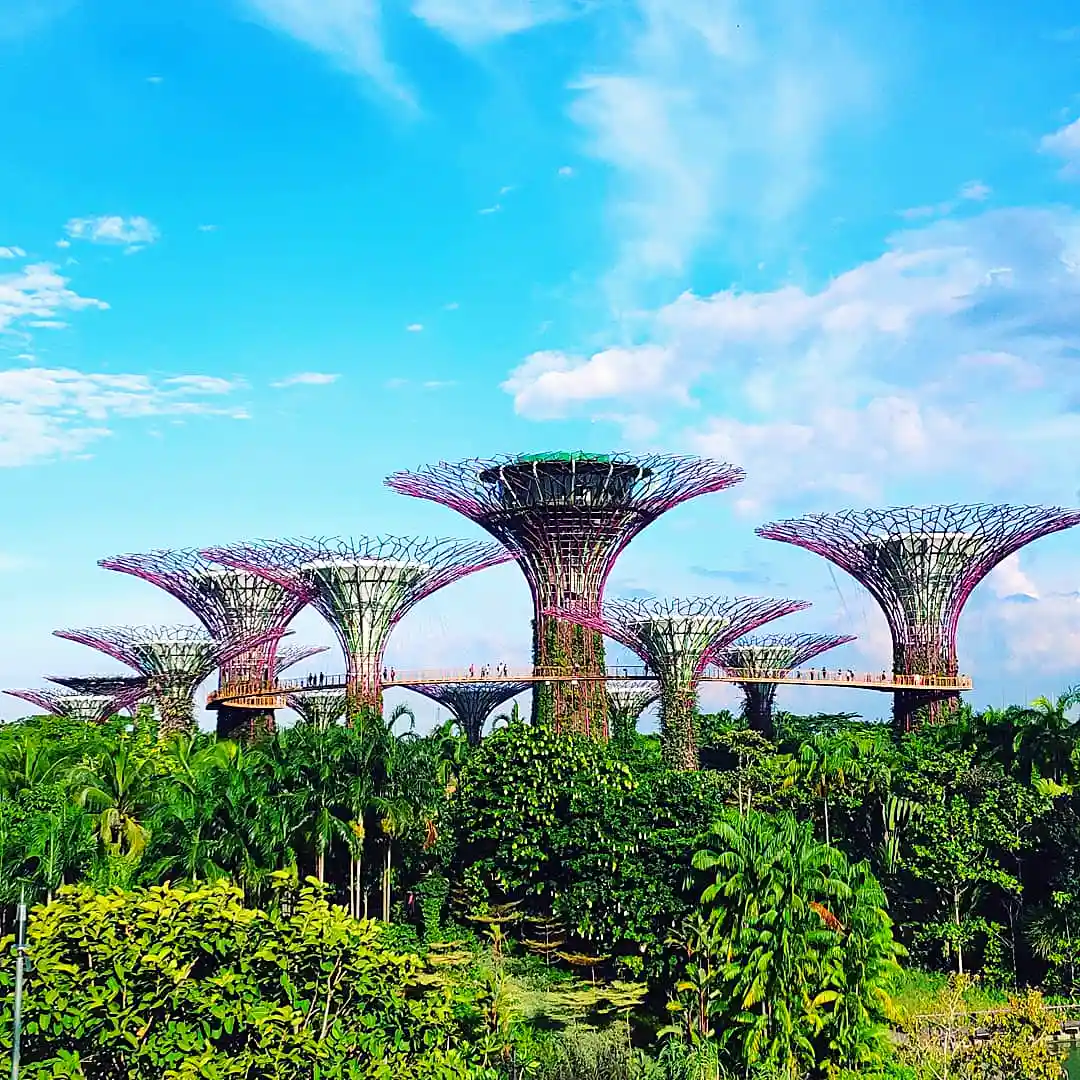
Marina Bay in the evening is the standard first-night move, and for good reasons. The Spectra light show at Marina Bay Sands runs twice nightly — free, about 20 minutes, a useful calibration for the scale of the area. Gardens by the Bay is a 10-minute walk from the nearest MRT station and stays open late. The Flower Dome and Cloud Forest require tickets; the Supertree Grove and the outdoor circuit are free and worth a loop after dark when the structures are lit.
Dinner on Day 1: a hawker centre is a better orientation than a sit-down restaurant. Maxwell Food Centre near Chinatown and Satay by the Bay near Gardens by the Bay are both accessible from the Marina area. Start with chicken rice. Adjust from there.
Day 2: Chinatown, Little India, and the Character Neighbourhoods
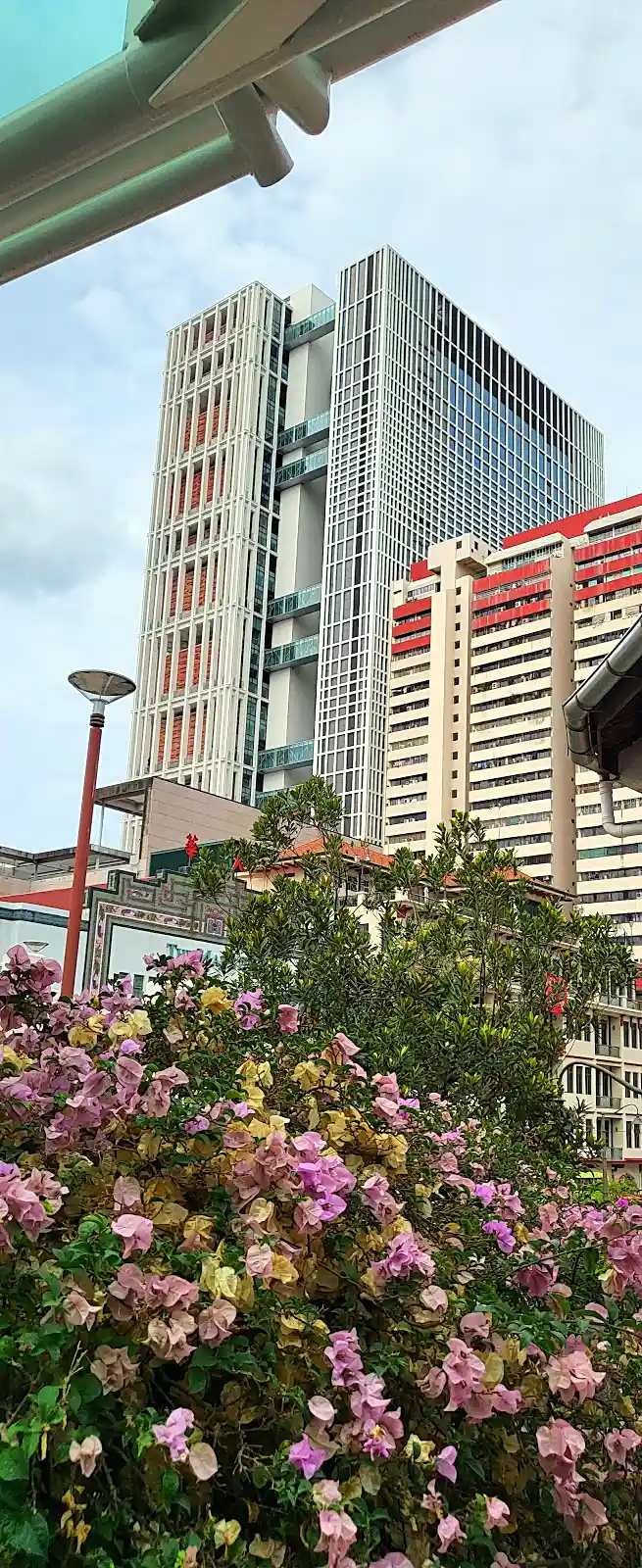
These two areas are a few MRT stops apart and best covered on foot. Chinatown operates differently depending on the time of day: the morning market around Temple Street and Smith Street is the more genuine version; by evening it orients more toward visitors and increases in table pressure accordingly. Sri Mariamman Temple on South Bridge Road is Singapore's oldest Hindu temple and worth 20 minutes.
Little India around Serangoon Road has the Sri Veeramakaliamman Temple, a stretch of textile shops, and the kind of spice market that actually smells like one. It is also directly adjacent to Kampong Glam — the Arab Quarter — which has the Sultan Mosque and a main street of independent shops. The walk between Little India and Kampong Glam takes under 10 minutes and is worth making.
Clarke Quay is technically in the same general area and is a riverside bar strip that caters primarily to tourists. It is fine. It is not the thing you came to Singapore for.
Day 3: Sentosa Island and Singapore's Green Side
Sentosa is a half-day unless Universal Studios is a specific priority, in which case it becomes a full-day commitment and should be planned around accordingly. For everyone else: take the Sentosa Express from VivoCity (free with EZ-Link), walk to Siloso or Palawan Beach, and spend a few hours. The beaches are maintained, popular, and close to the city. They are not the reason you travel to Southeast Asia for beaches — but they are the reason Singaporeans have a beach option on a Tuesday afternoon.
The Singapore Botanic Gardens is the better second half of Day 3. It is a UNESCO World Heritage Site, largely free (the National Orchid Garden has a fee), and it converts the sceptics who assumed a botanical garden was decorative rather than genuinely interesting. The collection is substantial. The grounds are well-maintained without feeling manicured into sterility. It is one of the better parks in the region.
Alternatively: the National Museum of Singapore fits the second half of Day 3 if that's more useful. Strong permanent collection, well-curated, air-conditioned.
Day 4: The Leftover Day, Which Is Usually the Best One
Day 4 is for the things that didn't fit. This is not a consolation slot — it's often the most relaxed and enjoyable day of the trip because there's no schedule to maintain.
If you haven't spent serious time at a hawker centre yet, the morning is for correcting that. Lau Pa Sat in the CBD, Maxwell Food Centre in Chinatown, and Old Airport Road Food Centre in the east are the established options. Char kway teow, laksa, Hainanese chicken rice, and roti prata are the things to eat. The food in Singapore is the cultural experience; the rest is context.
If you want a museum that doesn't feel like a tourism product: the Asian Civilisations Museum on the river has a legitimate permanent collection covering Southeast and South Asian history. The Singapore Art Museum covers Southeast Asian contemporary art in a way that's actually curated rather than assembled. Both are worth two hours if the itinerary has room.
The Rule of Thumb for a Singapore Trip Plan
Rule of thumb: build your singapore trip plan around neighbourhoods, not individual attractions. Singapore's MRT makes any attraction reachable from any base; the question is which area you want to spend time in for each half-day and what that base lets you walk to without planning.
(This is the same logic that works in most cities with good public transport, and that almost everyone ignores in favour of a list of fifteen attractions with no geographical logic. Singapore, being small and efficient, makes the consequences of ignoring this logic more immediately visible than most cities — because the attractions are spread across the whole island and the taxis add up faster than expected.)
What You Should Know Before Booking a Singapore Trip From India
Singapore is not a budget destination from India. Flights from major Indian cities take four to six hours; Changi is one of the better airport experiences globally, which means the arrival day tends to start well. Accommodation in central areas — near Marina Bay, the CBD, or Orchard Road — is significantly more expensive than comparable options elsewhere in Southeast Asia. The practical adjustment is to book one MRT stop outside the main tourist corridor: Lavender, Bugis, Tanjong Pagar, and Queenstown all have hotel options at meaningfully lower prices with easy MRT access to everything on the itinerary.
Food at hawker centres is the exception to the expensive-Singapore generalisation. A proper hawker meal costs less than a comparable restaurant meal almost anywhere in India — the food is excellent, the settings are functional, and the fact that locals eat there regularly is the most reliable quality signal available.
For visa requirements: check current Singapore entry rules directly through the official Singapore immigration website, or through Vani, which surfaces live visa information based on your passport. Entry policies can update, and forum threads tend to lag official sources by enough to cause actual problems at the airport.
What Vani Can Do for Your Singapore Trip Plan
If you're building a Singapore trip from scratch, start a conversation with Vani on G8Trip. Tell her your travel dates, group size, and whether children are travelling — the itinerary changes meaningfully depending on whether Universal Studios is in the brief. She'll produce a day-by-day plan, search live flight prices from your city, and pull up hotel availability for your dates and preferences.
What Vani doesn't do: she doesn't negotiate hotel rates, and she won't tell you which hawker stall has the shorter queue. The booking and the final decisions are still yours. What she removes is the research phase — the two hours of cross-referencing flights and hotel aggregators before you've even settled on an itinerary structure. That part she handles in a single conversation.
How many days is enough for a Singapore trip?+
What is the best time to visit Singapore?+
Is Singapore expensive for Indian travellers?+
What is the best way to get around Singapore?+
Can Vani plan a Singapore trip?+
Singapore is the rare city where the planning process is more complicated than the trip itself. Four days, one transit card, a deliberate decision not to see everything. The architecture is good, the food is excellent, and the public transport works the first time without studying a map.
Book the hotels early if you're going in peak season. The rest figures itself out with a reliability that would impress a Swiss train schedule. Which, now that I think about it, is probably not a coincidence.
Ready to plan your trip?
Let Vani, our AI travel assistant, build your perfect itinerary.
Start planning for free →