
Spain Itinerary: Two Weeks That Actually Make Sense
Spain is the country most first-time visitors try to see too much of in too little time. The geography looks deceptively manageable on a map. Then the booking screen appears and you realise that Barcelona to Seville is a five-and-a-half-hour train ride, Seville to Madrid is another two and a half hours, and you've built a spain itinerary that spends more time in transit than at any single destination.
The fix isn't a better route. It's a different question: north or south? The two halves of Spain are genuinely distinct in culture, architecture, food, and atmosphere. Trying to do justice to both in under twelve days usually means doing neither properly.
ℹ️ TL;DR: Spain Itinerary in Brief
Two weeks is the minimum to cover Barcelona and Andalusia without feeling rushed. Under two weeks, pick one region. If you're choosing one, Andalusia offers more concentrated variety per day. If you're doing two weeks, fly into Barcelona and out of Madrid — it avoids a return journey and gives you a natural route south.
The Spain Itinerary Decision Comes Before the Flight Search
Most people approach a Spain trip as a list of places — Barcelona, Seville, Granada, Madrid — and then try to connect them chronologically. This works, but the sequence matters more than most itinerary articles suggest.
The efficient route runs north to south or south to north, not back and forth. Fly into Barcelona, travel south through Andalusia (Seville, Córdoba, Granada), then up to Madrid and fly home. Or the reverse. What doesn't work is Barcelona, Madrid, Barcelona, Seville — which adds unnecessary return legs and turns travel days into the dominant feature of the trip.
A ten-day trip can handle two of these three clusters: Barcelona, Andalusia, or Madrid. Two weeks handles all three, with meaningful time in each. Decide on your actual time budget before you build the route, not after.
Days 1–4: Barcelona — More Than Gaudí, But Start with Gaudí
Barcelona rewards four days. Three feels rushed; five starts to feel like you've run out of new things. Four days lets you see the Gaudí landmarks properly, spend real time in the Gothic Quarter, and have at least one afternoon with no plan.
The Sagrada Família needs a pre-booked timed entry — it sells out weeks in advance during peak season. Book it before anything else, not because it's the best thing in Barcelona but because it's the hardest to get into after you've arrived. Park Güell is the same: timed tickets, limited slots, book early. Neither is worth queuing for on the day.
The Gothic Quarter rewards wandering. Allow an afternoon with no map objective. La Boqueria market is best before 10am, when it's still a market rather than a tourist attraction (both things happen in the same building and look quite different).
What Barcelona Rewards and What It Punishes
Barcelona punishes over-scheduling more than most European cities. The locals eat late, the evenings are long, and the best experiences often happen after the official attractions have closed. Build in unstructured time from Day 2 onwards.
Barceloneta beach is a 15-minute walk from the Gothic Quarter. It's a real city beach — not a resort — and it's worth a morning or late afternoon. Montjuïc hill, with the castle and Olympic stadium, is a half-day by cable car or on foot. The Picasso Museum in El Born neighbourhood is underrated and usually less crowded than the Gaudí circuit.
Days 5–10: Seville, Córdoba, and the Alhambra in Granada
Andalusia is where a Spain itinerary either holds together or falls apart. The temptation is to see Seville, Córdoba, and Granada in quick succession. The problem is that each city rewards two nights minimum — trying to do all three in four days means leaving each one before you've settled.
Seville gets two nights. The Alcázar — a royal palace complex with tiered gardens — is one of the best things in Spain. Book timed entry in advance. The Cathedral and Giralda tower are next door and take half a day. The Barrio Santa Cruz neighbourhood is best walked without a destination in mind.
Córdoba works as a day trip from Seville or a one-night stop en route to Granada. The Mezquita — former mosque, now cathedral — is architecturally unlike anything else in Spain. Two hours inside, one hour in the Jewish Quarter around it.
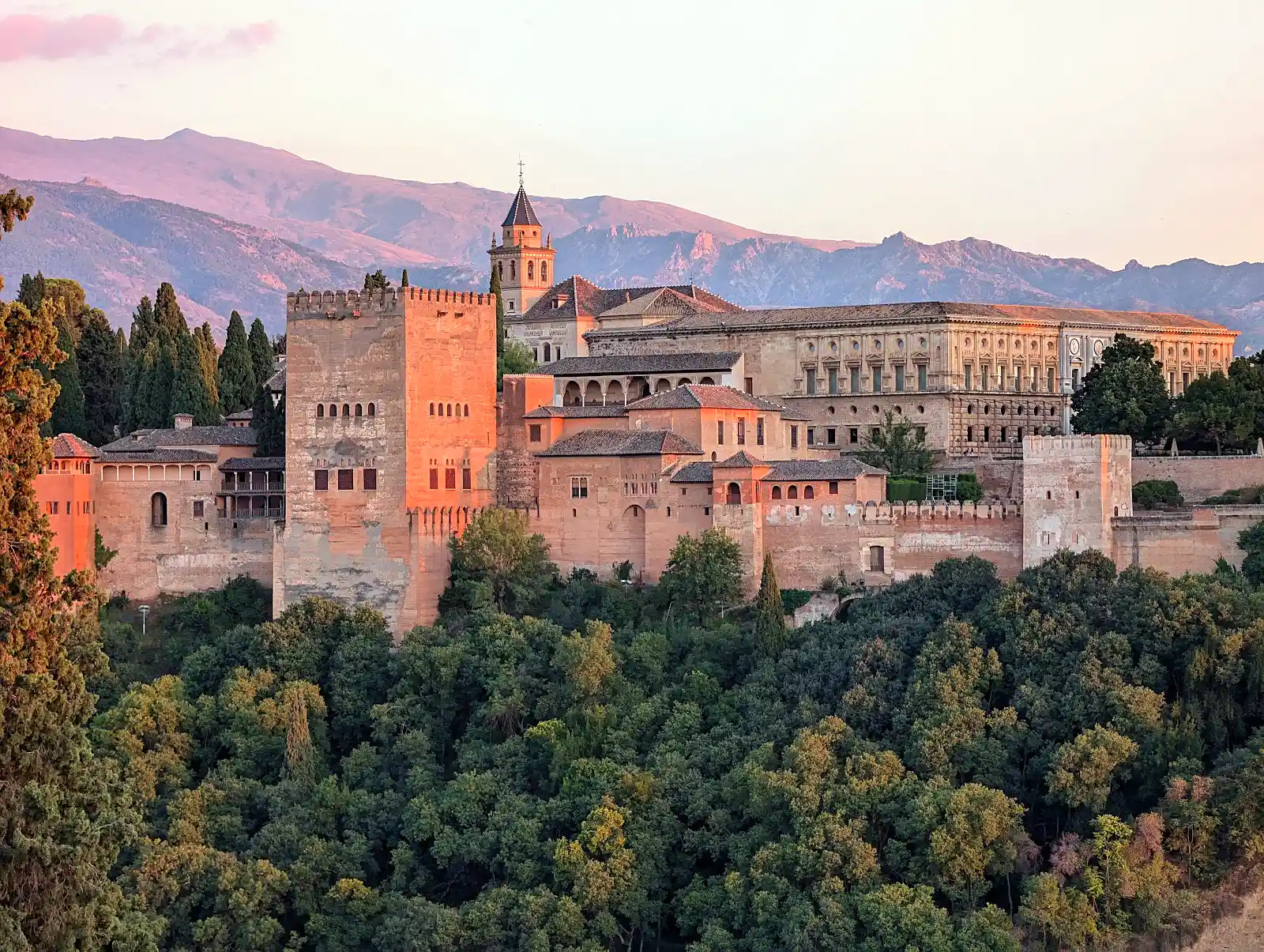
Granada is the centrepiece. The Alhambra palace complex is one of the most visited monuments in Europe. Tickets sell out months in advance during peak season. This is not a scheduling preference; it's a hard constraint. Book Alhambra tickets the moment your dates are confirmed.
Days 11–14: Madrid and a Day Trip Worth Taking
Madrid is denser, flatter, and more thoroughly urban than Barcelona or the Andalusian towns. Three nights is enough for a first visit.
The Prado Museum holds one of Europe's most significant art collections. Half a day minimum; a full day if Velázquez, Goya, and El Greco are priorities. The Reina Sofía for modern art is nearby and worth a separate afternoon. Retiro Park is the best place to spend the hours between lunch and the late Spanish dinner hour.
Day trips are worth building in. Toledo is 30 minutes by high-speed train — a medieval city compact enough to cover in five hours. Segovia is slightly further and has the Roman aqueduct. Both are better than filling a third Madrid day with a fourth museum.
The Rule: Train Between Cities, Fly Into and Out of Different Ones
Spain's high-speed rail network is one of the best in Europe. Barcelona to Madrid runs in under three hours. Madrid to Seville in about two and a half. These are comfortable journeys with good city-centre stations at both ends — which is not something you can say about most European short-haul flight routes once you've added airport transfer times.
Rule of thumb for a Spain itinerary: take the train between cities and fly into one end, out of the other. If you're doing Barcelona → Andalusia → Madrid, fly into El Prat in Barcelona and out of Barajas in Madrid. The open-jaw ticket usually costs about the same as a return to one city, saves you a four-hour backtrack, and gives you a cleaner trip structure. Vani can search the open-jaw flights and compare them against return options so you're working with real prices before you decide.
One addition worth checking: if you have an extra two days, consider San Sebastián in the north — food culture unlike anywhere else in Spain, a short flight or train ride from Madrid, and a strong enough reason to adjust the entire route. This is a personal opinion. You can find the evidence easily enough.
⚠️ Book These Before Anything Else
Sagrada Família timed entry, Alhambra tickets, and Park Güell slots sell out weeks or months ahead. These are not suggestions to book in advance — they are constraints. If your Spain dates are confirmed, book all three immediately. Then build everything else around them.
What Vani Can Handle for a Spain Trip
A Spain itinerary involves more coordination than most European trips — multiple cities, open-jaw flights, train legs, and timed entry across several major attractions. Vani can handle the scaffolding.
Tell Vani how many days you have, which cities matter most, and your preferred pace. She'll build a day-by-day structure, flag where you're over-scheduling Andalusia (the most common Spain planning mistake), and search real-time flights and hotels for each leg. She can also find travel insurance and an international eSIM if you're arriving from outside the EU.
Alhambra and Sagrada Família tickets require booking directly through their official sites. Vani can point you there.
How many days do I need for a Spain itinerary?+
What is the best order to visit cities in Spain?+
When should I book the Alhambra in Granada?+
Is it worth taking the train between cities in Spain?+
Should I visit Barcelona or Andalusia for a first Spain trip?+
Spain is the trip most people plan twice. The first time, they try to see everything and end up with a highlight reel. The second time, they pick a region, slow down, and come back from a place rather than a list of places. You don't have to make the first-trip mistake to get to the second-trip outcome. Plan the route before you search for flights, book the Alhambra before you book the hotel, and leave at least two half-days in every city with nothing on the agenda.
The itinerary you'll actually enjoy is the one with some room in it. Spain will fill that room. It's good at that.
Ready to plan your trip?
Let Vani, our AI travel assistant, build your perfect itinerary.
Start planning for free →